
Health and Social Sciences
Welcome to the Health and Social Sciences Department, where our mission is to equip dedicated individuals with the practical skills needed to make a profound difference in their communities. Whether your calling is to respond to critical emergencies on the front lines, ensure safety in the workplace, or provide vital emotional and social support to vulnerable populations, our programs are designed to turn your compassion into a meaningful career.
We offer a comprehensive portfolio of industry-aligned Occupational Certificates and Occupational Skills Programmes (OSP). Our curriculum bridges the gap between theoretical knowledge and hands-on, real-world application, ensuring our graduates step into the workforce as competent, confident professionals. Explore our range of specialized certifications below and take the first step toward a rewarding future dedicated to safeguarding lives and fostering social well-being.
Occupational Certificate: Firefighter
NLRD: 98991
NQF: 4
Credits: 149
Duration: 12 Months
Fee: R29,000.00

The purpose of this qualification is to prepare a learner to operate as a Firefighter.
A Firefighter performs a variety of tasks, associated with responding to and dealing with fires and emergency situations and participating in fire prevention/safety work and training exercises.
The fire fighter ensures station and equipment maintenance to ensure the delivery of effective and efficient emergency services in order to protect life, environment and property.
A qualified learner will be able to:
- Reduce the loss of life and property through fire risk identification, inspection, education and response readiness.
- Perform fire ground operations.
- Perform rescue operations in emergencies.
- Protect life, environment and property in the event of a hazardous material/dangerous goods incident.
Occupational Health and Safety
NLRD: 121527
NQF: 5
Credits: 120
Duration: 12 Months
Fee: R26,400.00

The purpose of this qualification is to prepare a learner to operate as an Occupational Health and Safety Practitioner.
An Occupational Health and Safety Practitioners serve as a facilitator and advisor to employees and management regarding safety and health aspects in the workplace.
A qualified learner will be able to:
- Inspect work places and environments to identify the occupational health and safety hazards and determine the risks associated with the work.
- Facilitate and support actions to eliminate or control hazards in order to minimise risks in a designated work area.
- Represent the needs of employees with regard to Occupational Health and Safety matters.
- Participate in the planning and implementation of operational Occupational Health and Safety Management Systems.
- Monitor and continually improve the effectiveness of operational Occupational Health and Safety systems.
SOCIAL AUXILIARY WORKER (SAW)
NLRD: 98890
NQF: 5
Credits: 129
Duration: 12 Months
Fee: R28,380.00

The purpose of this qualification is to prepare a learner to operate as a Social Auxiliary Worker. This occupation assists in the provisioning of social services and support to individuals, families, groups and communities with regards to a full range of social services and related social welfare matters.
A qualified learner will be able to:
- Provide basic counselling and support services to individuals and families with socio- economic challenges.
- Facilitate non-therapeutic (educational and support groups) groups towards achieving the f the developmental goals of the group.
- Facilitate participatory development in communities to address their common socio- economic needs and to promote social justice.
- Collect and collate data to inform social services interventions.
SOCIAL COUNSELLING WORKER
NLRD: 111142
NQF: 5
Credits: 143
Duration: 12 Months
Fee: R31,460.00

The purpose of this qualification is to provide the required knowledge, practical skills and workplace- based experience to prepare a learner to operate as a Social Counselling Worker. A Social Counselling Worker provides supportive counselling services to individuals, families, groups and/or communities within various contexts.
Qualifying learners will be able to:
- Screen and/or assess well-being in supportive counselling services.
- Facilitate appropriate interventions based on various clients' needs.
- Compile client intervention plan.
- Apply appropriate referral procedures as per organisational processes and procedures.
CHILD AND YOUTH CARE WORKER
NLRD: 99510
NQF: 5
Credits: 190
Duration: 18 Months
Fee: R41,800.00

The purpose of this qualification is to prepare a learner to operate as a Child and Youth Care Worker.
A qualified learner will be able to:
- Provide holistic, basic and developmental care for orphaned, vulnerable and at risk children and youth.
- Apply behaviour management and support techniques in routine child and youth care contexts.
- Implement life space work and life space counselling.
- Maintain planned environments in child and youth care work.
- Participate in developmental assessment of children and youth.
- Assist with the implementation of programmes and activities to deal with identified needs.
- Advocate for the rights of children and youth.
- Undertake basic Child and Youth care administration.
HEALTH PROMOTION OFFICER (HPO)
NLRD: 94597
NQF: 3
Credits: 163
Duration: 14 Months
Fee: R29,340.00

The primary objective of the Health Promotion Officer qualification is to develop frontline professionals capable of driving proactive wellness strategies. By identifying health risks before they escalate into crises, HPOs reduce the long-term burden on healthcare infrastructure and improve overall community resilience.
Learners will be prepared to:
- Carry out basic assessments of communities, households, groups and individuals.
- Provide basic health education and referrals for a wide range of services.
- Support and assist in navigating the health and social services system.
Basic Emergency First Aid Responder (First Aid Level 1)
NLRD: SP-230801
NQF: 2
Credits: 2
Duration: 3 Days
Fee: R800.00

Achieving a Basic Emergency First Aid Responder certificate provides several benefits for the learner, including:
- Increased employability: Many employers require their employees to have basic first aid skills, and a Basic Emergency First Aid Responder certificate increases the learner's chances of being employed or promoted in a variety of industries and occupations.
- Ability to respond to emergencies: Basic first aid skills enable the learner to respond to emergencies in their personal and professional life, such as accidents, injuries, and sudden illnesses. This improves their ability to care for themselves, family, and the community.
- Increased confidence and self-esteem: It build learners’ confidence and self-esteem, knowing that they have the skills and knowledge to help others in need.
- Potential to save lives: It enables a learner to provide immediate care and support to someone who is injured or ill, which can potentially save lives.
- Personal development: Learning basic first aid skills provides an opportunity for personal growth and development, as the learner gains new knowledge and skills and develops their ability to think and act in emergency situations.
Integrated Emergency First Aid Responder (First Aid Level 2)
NLRD: SP-230802
NQF: 3
Credits: 5
Duration: 8 Days
Fee: R2,250.00

A person who successfully completes an Intermediate Emergency First Aid Responder certificate can experience several benefits, including to:
- better understand how to assess a situation, provide initial care, and contact emergency medical services if needed.
- improve employability and enhance their career opportunities.
- improve an individual's overall safety awareness and be better equipped to identify potential hazards in their environment and take steps to prevent accidents or injuries from occurring.
- provide an individual with lifesaving skills that can make a significant difference in emergency situations.
- respond to medical emergencies such as heart attacks, strokes, and anaphylaxis, which can potentially save lives.
- contribute to personal development by enhancing problem-solving skills, teamwork, and communication skills. These skills can be valuable in both personal and professional contexts.
Advanced Emergency First Aid Responder (First Aid Level 3)
NLRD: SP-230803
NQF: 4
Credits: 6
Duration: 10 Days
Fee: R3,000.00
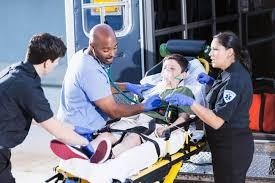
Learners who complete the Advanced Emergency First Aid Responder skills programme will obtain several specific benefits, including:
- Comprehensive Assessment: Learning to conduct rapid primary and secondary surveys to identify life-threatening conditions often missed by untrained eyes.
- Clinical Proficiency: Mastering the use of specialized equipment, such as Automated External Defibrillators (AEDs), advanced airway adjuncts, and oxygen therapy.
- Decision-Making: Developing the critical thinking skills required to triage multiple patients and prioritize interventions based on the severity of the injury.
- High-Performance Resuscitation: Training goes beyond simple chest compressions to include integrated team-based CPR, pediatric-specific protocols, and managing respiratory arrest.
- Critical Trauma Care: Participants learn to manage complex injuries such as multi-system trauma, spinal stabilisation, severe hemorrhaging, heatstroke and hypothermia
- Psychological Readiness: Through realistic simulations, learners build the "muscle memory" needed to remain calm and focused during the chaos of a real-life emergency.
- Versatile Application: Whether it’s a high-risk industrial workplace, a crowded school environment, or an unpredictable public setting, responders are equipped to take command of the scene until professional paramedics arrive.
- Professional Credibility: Graduates become recognized safety leaders within their organizations, providing peace of mind to colleagues and the public alike.
school hours
Monday - Friday: 8am - 5pm
Address
44 Senator Marks Avenue, Vereeniging
admin@makoglobalinstitute.co.za
training@makoglobalinstitute.co.za
Call/WhatsApp
071 164 12710